


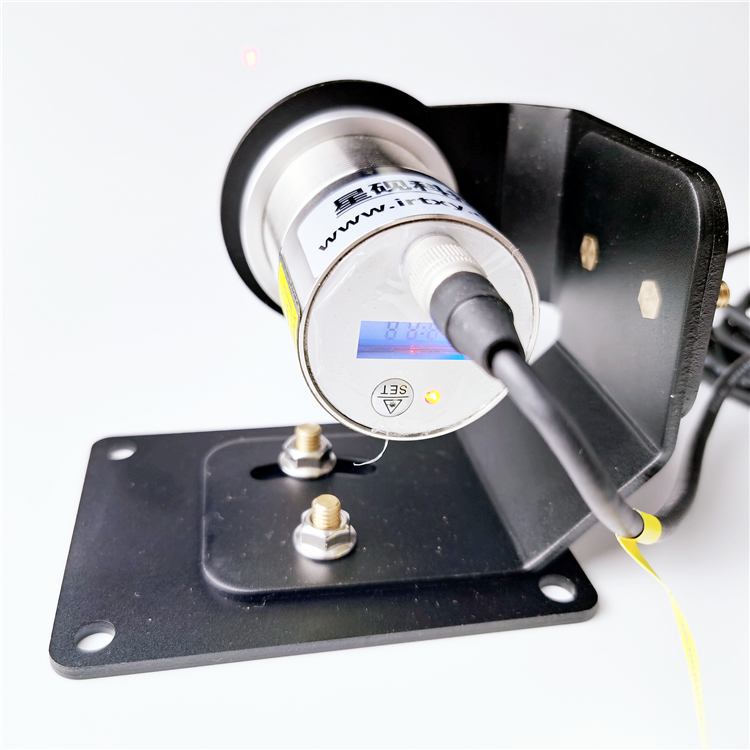
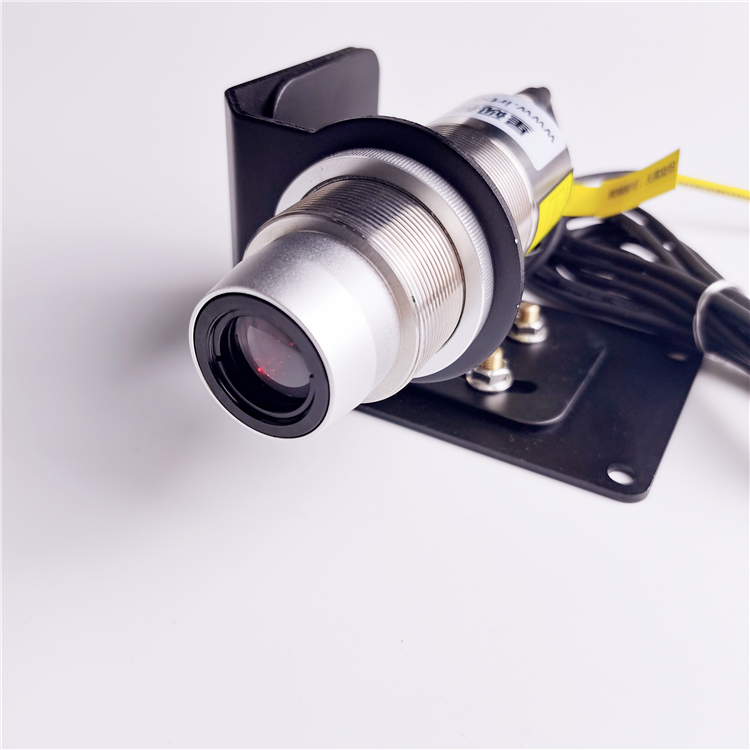
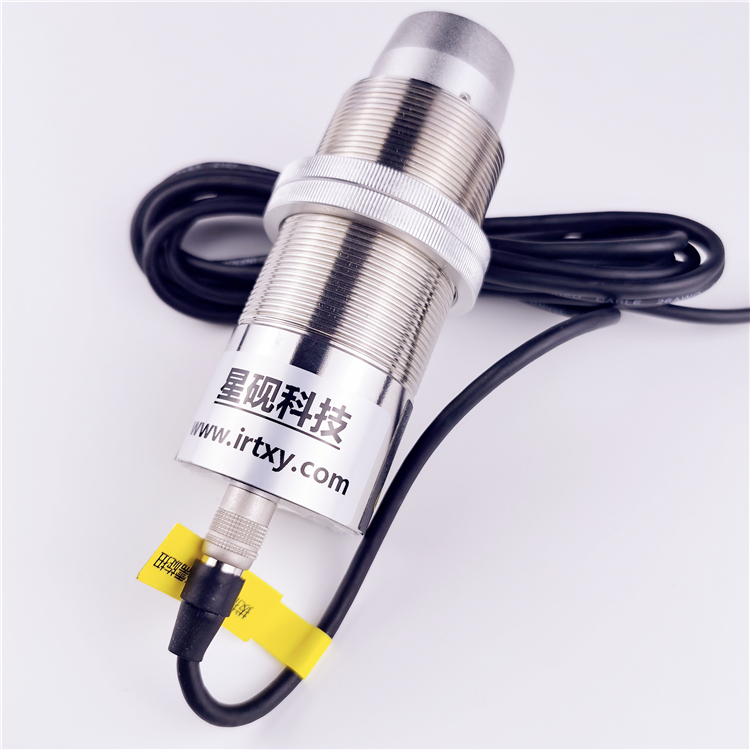
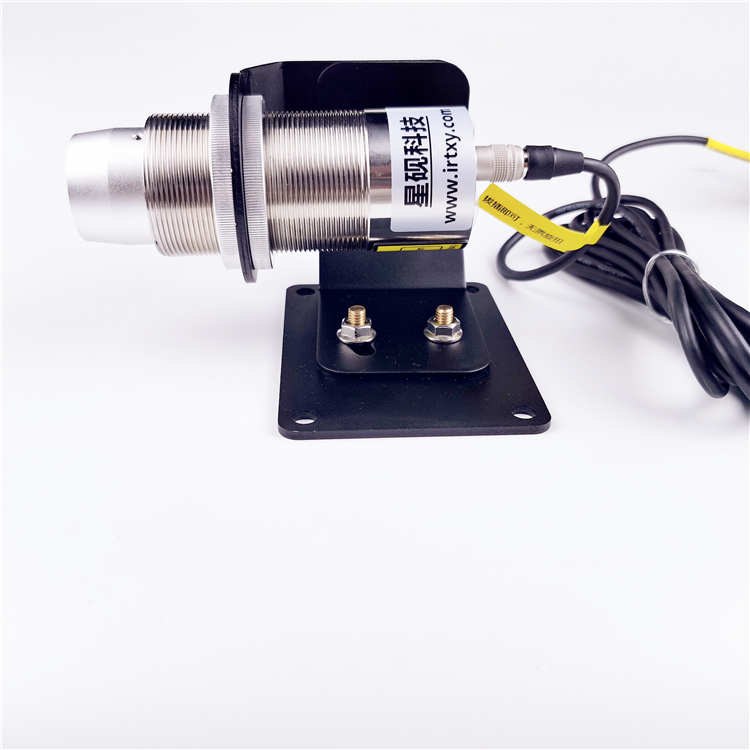
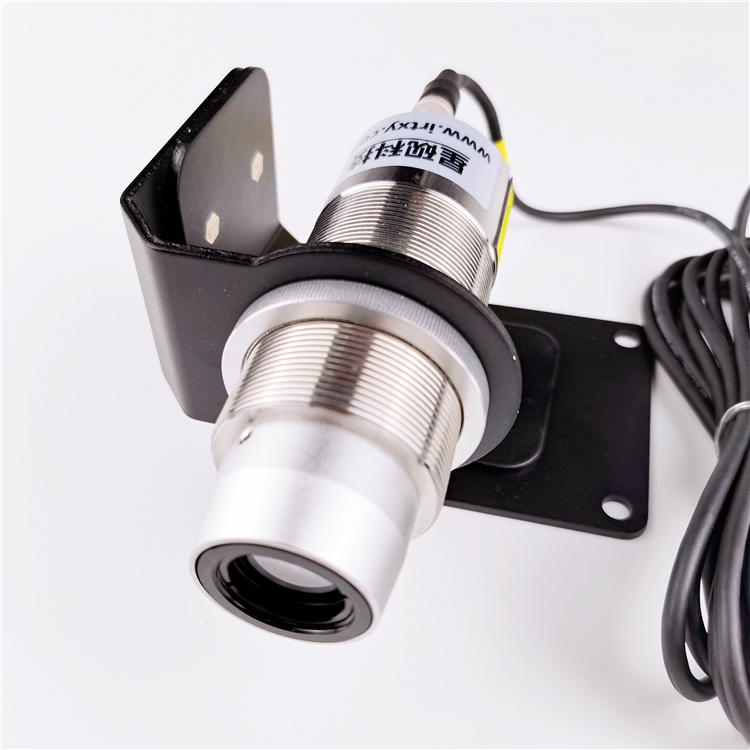
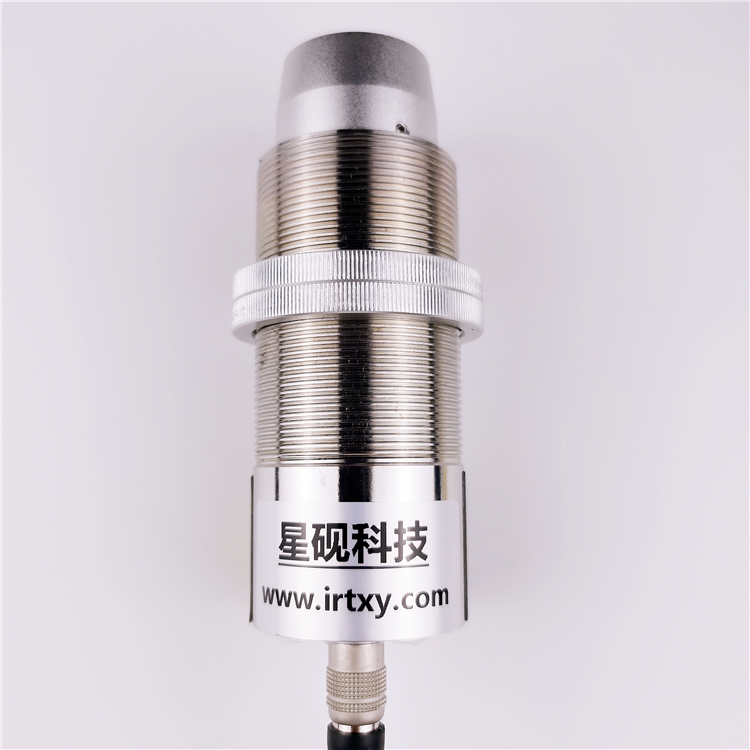
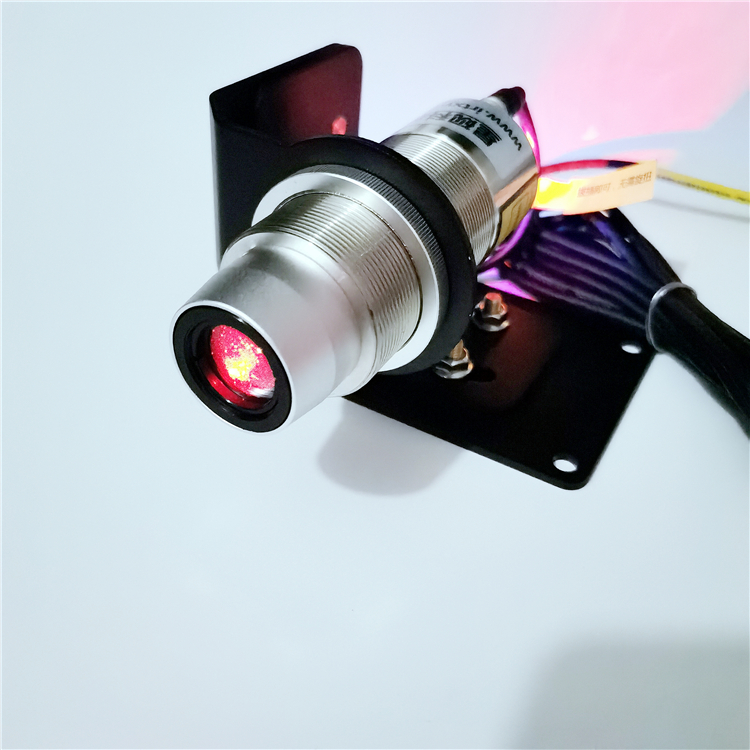
XY-CF Series, Focusing Non-Contact Infrared temperature sensor,4-20mA Output, Laser Aiming, LCD Display
XY-CF Series, Focusing Non-Contact Infrared temperature sensor,4-20mA Output, Laser Aiming, LCD Display
• Temperature measurement range: 150℃~2000℃ (customizable temperature range)
• Suitable for measuring metals and metal solutions
• Standard zoom lens can focus down to 2mm
• Output signal 4-20mA
• LCD temperature display
• Adjustable emissivity
• Four-wire system
• Xingyan Electronics XY-CFseries has precise coaxial center laser aiming function;
• The LCD displays the current status, which can easily align the measurement target and indicate the best measurement distance;
• The focus point can measure 2mm objects;
• Professional measurement of metals and metal solutions;
• Various types of options (purgers, cooling protective jackets, etc.) are available to meet the requirements of various working conditions.
Basic Details
Model: XY-CF Series
Range: 50℃~300℃/70℃~500℃/100℃~600℃/250℃~900℃/
300℃~1400℃/600℃~2000℃/800℃~2400℃/70~1200℃.......
Supply: 24 V DC
Output: 4-20mA
Spectral range: 1.0μm 、1.6μm 、2.3μm
Accuracy: ±1% or ±2°C(Ambient temperature: 23℃±5℃)
Response time: 5ms (95% Response)
Repeatability: ±0.5% or ± 1℃
Field of View: 150:1
Emissivity: 0.100-1.099, step size 0.001
Maximum current/resistance: 100mA/750Ω
Focal length: 300mm
Spot size: 2mm
Appearance properties
Material: Stainless Steel
Dimensions: Φ45×113mm
Weight: About 400g
Cable length: 3m(Can be customized length)
Use environment
Environmental (IP) rating: IP65
Ambient temperature: 0℃~60℃
Humidity: 10%-95%(No condensation)
Storage environment: -20℃~80℃
Field of View:150:1
Emissivity adjustment
Press the <SET> key for about 5 seconds to enter the radiation rate setting;
The third decimal place is flashing, set by <SET> key (0~9);
After 2 seconds, the second decimal place will flash, and you can set it through the <SET> key (0~9);
After 2 seconds, the third decimal place will flash, set by <SET> key (0~9);
After 2 seconds, the 1st digit will flash, set by <SET> (0~1);
After another 2 seconds, it will automatically exit and automatically save.
Laser and emissivity buttons
Press the button to perform the laser switch function and the emissivity setting function.
Use of lasers
Each time the button is pressed, the probe performs laser on and off operations, and the indicator light next to the switch will work at the same time.
After the laser is turned on, the XY-CF series will automatically close in about 30 seconds, and the XY-CF series will automatically close in about 3-4 minutes.
Determine the emissivity of an object
The intensity of infrared radiation emitted by an object depends on the temperature of the object and the radiation properties of the material on the surface of the object. We use the parameter emissivity (ε-Epsilon) to describe the ability of an object to radiate energy outward. The emissivity can range from 0 to 100%. What we usually refer to as a "black body" refers to an ideal source of radiation with an emissivity of 1.0, while a mirror typically has an emissivity of 0.1. If you select an emissivity that is too high when measuring temperature with an infrared thermometer, the temperature displayed by the thermometer will be lower than the true temperature of the object being measured - assuming that the temperature of the object being measured is higher than the ambient temperature.
Measurement errors caused by objects with low emissivity (reflective surfaces) due to interference from other external radiation or background objects (flames, heating systems, refractories), in this case to reduce measurement errors, install and protect the probe very carefully Avoid reflected radiation sources.
To determine the unknown emissivity of an object, follow these steps
Use other contact meters to determine the true temperature of the object to be measured, then measure the object with an infrared thermometer, and adjust the emissivity settings so that the displayed value of the infrared thermometer is consistent with the actual temperature of the object.
For low temperature thermometers, a part of the surface of the object to be measured can be painted with black pigment with an emissivity of 0.98, the emissivity of the infrared thermometer can be adjusted to 0.98, the temperature of this part can be measured, and then the adjacent edges can be measured. temperature and adjust the emissivity until the displayed value matches the temperature just measured.
Typical emissivity
When none of the methods mentioned above can help you determine the emissivity of an object, you can use the emissivity table given in the attached table. This is only an average value, the actual material emissivity depends on the following factors: material temperature, measurement angle, surface geometry, material thickness, material surface structure (polished, oxidized, roughened, sandblasted), measured spectral range, transmission rate (such as thin films).
Email: irsensor@126.com , you will have a response within 48 hours.
